Website Optimalisatie
How Do You Show Proof of Your Work on a Private Chef Website?
 Stef Wubbe
A private chef can't simply show what he's done before. Most bookings are private, often at guests' homes or at a venue where privacy is a condition. That makes building a portfolio harder than in other crafts.
Yet proof is exactly what a visitor looks for before making contact. Not to check whether the chef can cook. But to gauge whether previous evenings went as carefully as this client expects.
This article is about that balance: how a private chef can show proof without breaking discretion, and which forms of proof actually work on this website.
What kind of proof works on a private chef website?
Proof works when it's specific enough to feel credible, but anonymous enough not to damage trust. An anonymised review fragment with concrete detail about the evening convinces more strongly than a star rating or a generic quote.
Three forms usually work best:
- a short, anonymised review fragment with a specific detail about the evening
- a brief description of the type of occasion, without a name or exact location
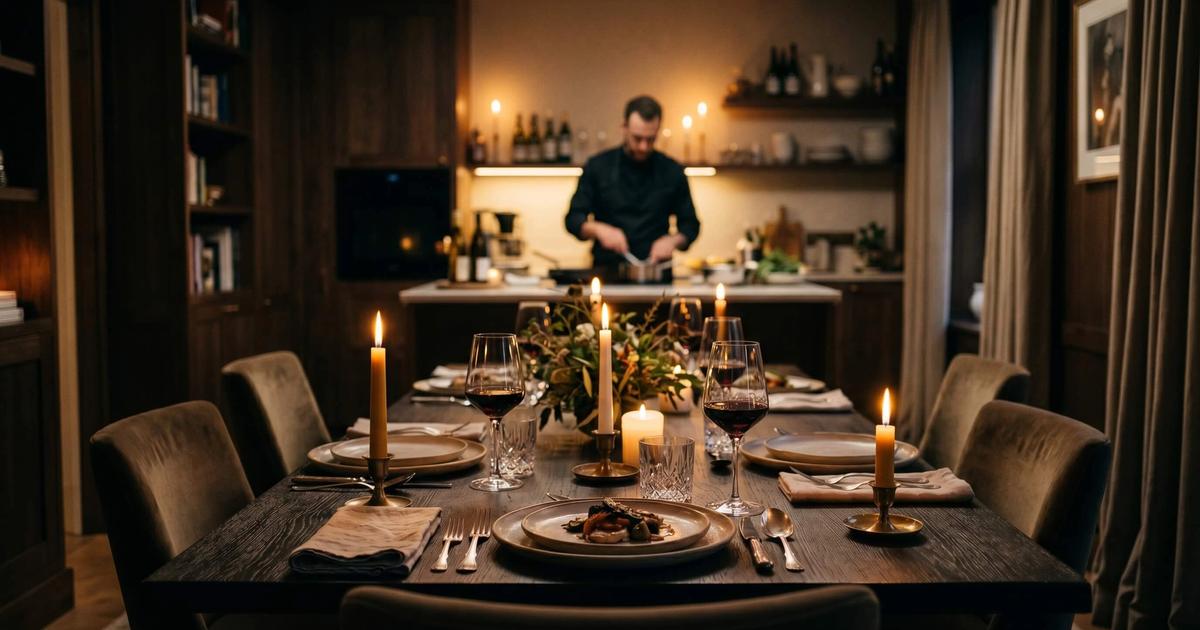
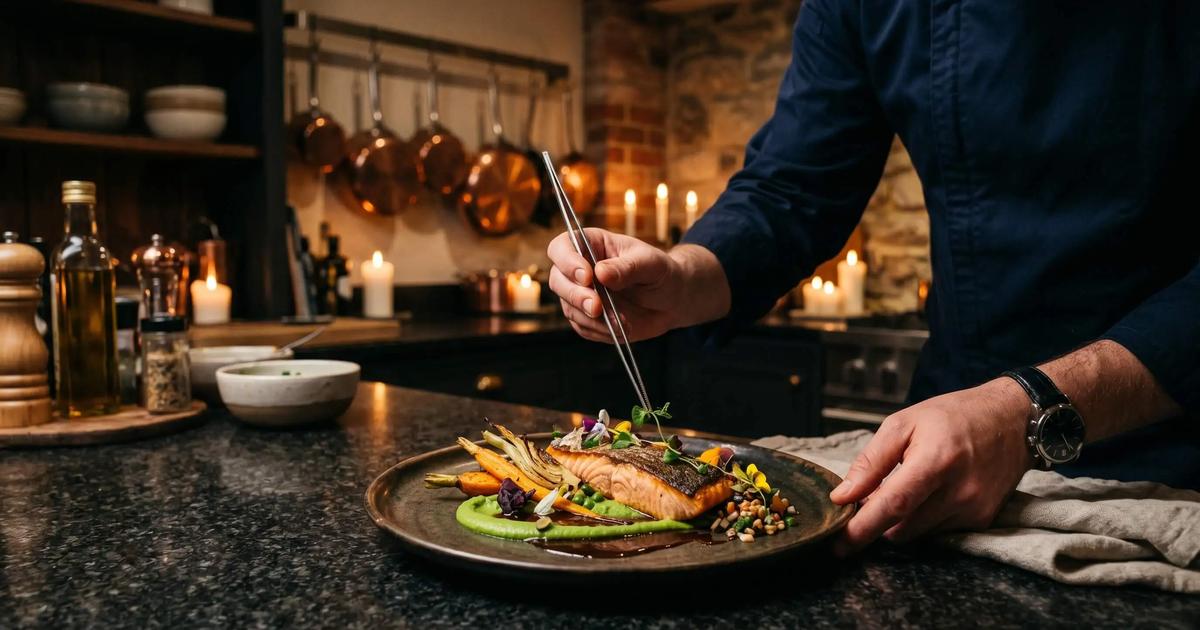
- imagery of dishes, table setting or service, without guests recognisable in the frame
It's not about the amount of proof. One precisely chosen fragment does more than a whole page of generic statements.
Why specific proof works better than generic proof
A review like "great evening, amazing chef" says little. A fragment like "the chef adjusted the menu during the evening for an allergy, without the guests noticing" says much more. It shows how the chef works, not just that guests were happy.
Specificity is what separates proof from a sales pitch. The more concrete the detail, the less it feels like marketing.
Which forms of proof don't work?
Generic proof undermines credibility more than it builds it. Star ratings without context, stock photos of food, or vague claims like "dozens of happy clients" quickly feel hollow on a private chef website.
A few patterns that tend to work against you more than for you:
- stars or numbers without explanation
- photos that could just as easily belong on any catering site
- claims about volume ("100+ events") without any substantiation
- testimonials so generic they could have been written by anyone
In private dining, scale works against you as proof. A chef who suggests he does hundreds of evenings a year raises the question of how much attention any single evening still gets. For this type of service, precision is a stronger signal than volume.
What photos should and shouldn't show
Photos of dishes and setting work best when they show the chef's style, not the luxury of the venue. A well chosen close up of a plate says more about craftsmanship than a wide shot of an expensive dining room.
Avoid photos where guests are recognisable, even with permission. The risk of recognition, however small, often doesn't outweigh the value of the image.
How do you present a case without naming names?
A case style description works best when it tells the story of the evening rather than the identity of the client. Describe the type of occasion, the challenge, and how the chef solved it. That gives context without anyone being traceable.
A structure that usually works well:
- the type of evening (for example, a birthday with twelve guests at an outdoor venue)
- a specific challenge (a dietary requirement, a short prep window, an unusual location)
- how the chef responded to it
In conversations with chefs who had their websites redone, it stood out that most hesitated to share anything for fear of breaching a client's privacy. Often that turned out to be solvable by telling the story of the evening without any identifying detail: no location, no date, no names. The situation stays recognisable, the client stays invisible.
How many cases are enough?
Two to four well developed cases usually work better than ten short ones. A visitor reads at most a few, and the quality of those few shapes the impression. A long list of short fragments dilutes the effect rather than strengthening it.
For the broader question of what visitors expect from a private chef website, including trust and clarity beyond the portfolio, read more in what clients expect from a private chef website.
Frequently asked questions
Can I use photos of guests if I have their permission?
Permission alone usually isn't enough reason to take the risk. Even with permission, being recognised can later feel uncomfortable for the guest. Choose atmosphere shots without recognisable faces instead.
Is one good testimonial enough for an entire website?
One strong, specific fragment works better than five vague ones. Spread the proof across the relevant pages rather than gathering it all in one place.
Should I mention how many events I do per year?
Not necessarily. In private dining, a high number raises doubts about attention per evening faster than it builds confidence about experience.
Do videos work better than photos as proof?
Only if they show the same level of care. A short, calm video of mise en place or plating can work. A busy highlight reel usually backfires.
Does every case need a testimonial?
No. A well described situation can stand on its own. A testimonial is an addition, not a requirement for every case.
Topics: #private chef,#portfolio,#social proof,#testimonials,#private dining