Website Optimalisatie
What Does a Yacht Owner Look for on Your Website Before Making Contact?
 Stef Wubbe
TL;DR: A yacht owner looking for maintenance, storage or another maritime service researches extensively online before making contact. He is not looking for stunning design or persuasive taglines. He is looking for answers to specific questions that give him confidence the contact will be worthwhile. Most maritime websites do not answer those questions.
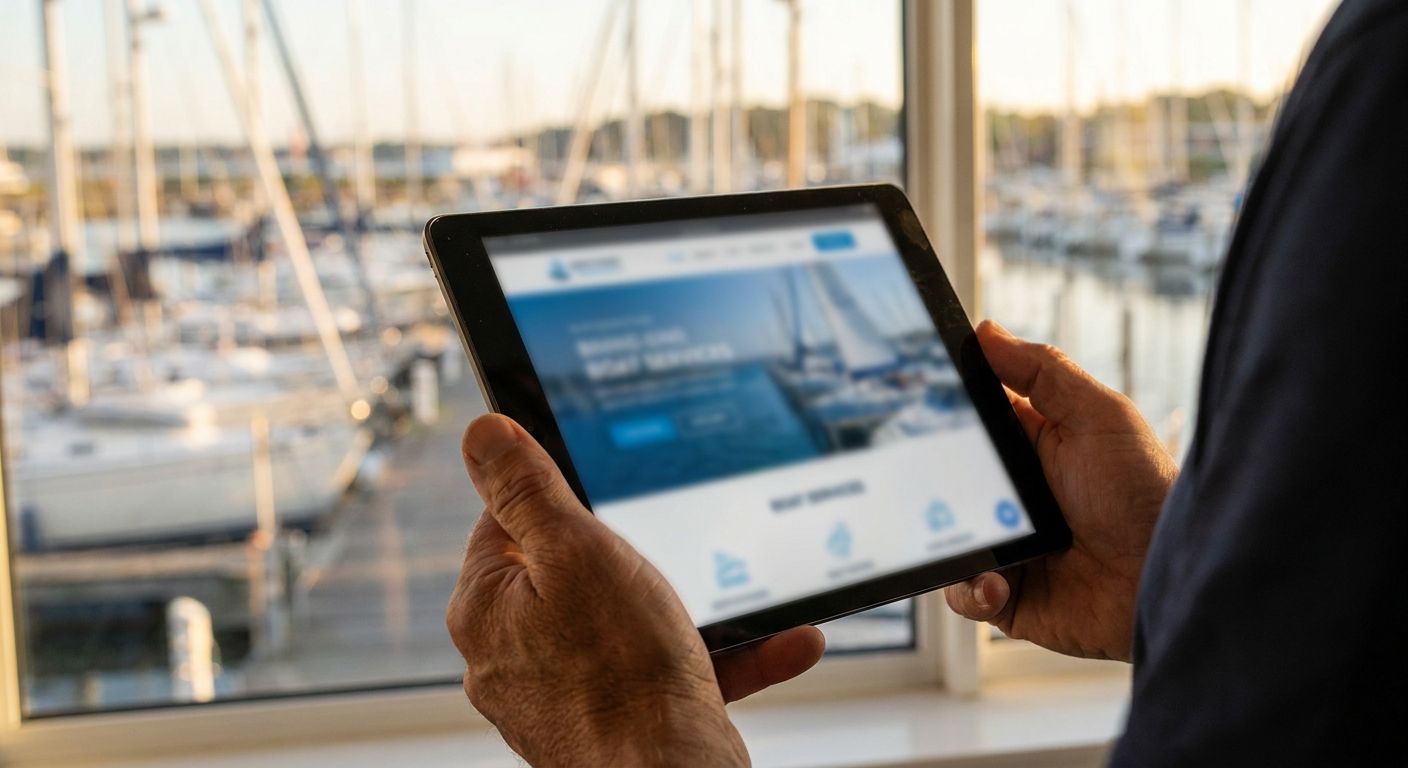
The decision to contact a maritime service provider is rarely made spontaneously. Someone wanting boat maintenance, looking for a broker to sell through, or needing a winter storage spot, first goes through a research phase.
That research happens largely online. According to research by Google and Ipsos on B2B buying behavior ("B2B Path to Purchase", Google/Ipsos, 2022), more than seventy percent of business buyers complete more than half of their research online before the first direct contact with a supplier.
A similar pattern applies to boat owners. Your website is not just your business card. It is where the decision to approach you, or not, gets made.
What makes a website for a maritime business credible?
The seven questions a yacht owner asks
Based on the buying behavior of owners in the maritime leisure sector, seven questions consistently come up during the research phase. Most go unanswered on the websites that need them most.
Question 1: Do they do what I'm looking for, for boats like mine?
The first question is also the most basic one: does this business fit my situation?
The owner of a twelve-meter sailing yacht looks for someone who knows that type of boat. The owner of an older steel motor boat looks for specific knowledge of steelwork and anti-corrosion. The owner of a Bénéteau or a Bavaria looks for someone who knows those brands.
If your website does not communicate this, if you do not specify the types of boats you work with, the materials you know, or the engine brands for which you are a certified service technician, the owner has no reason to assume you understand their boat.
Solution: name the types of boats, engines and materials you work with. Not as a full list, but as an indication of your specialization.
Question 2: Is this business trustworthy?
Trustworthiness is not communicated through claims ("we are reliable") but through evidence.
What works as evidence of trustworthiness:
- HISWA recognition as a yacht service business, with an explanation of what it means
- Membership of trade associations, including the practical meaning
- References from owners mentioned with name and context (with permission)
- Portfolio items with before-and-after documentation of completed work
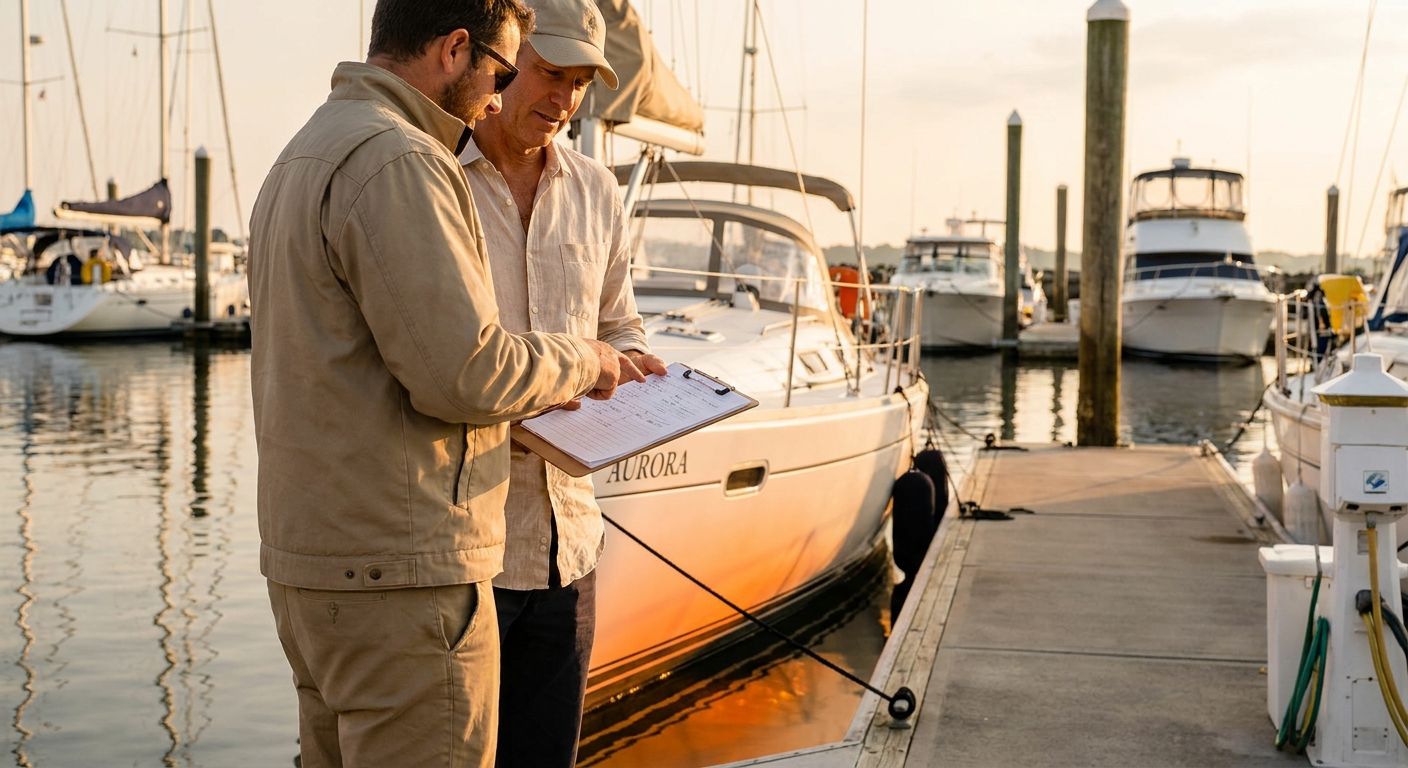
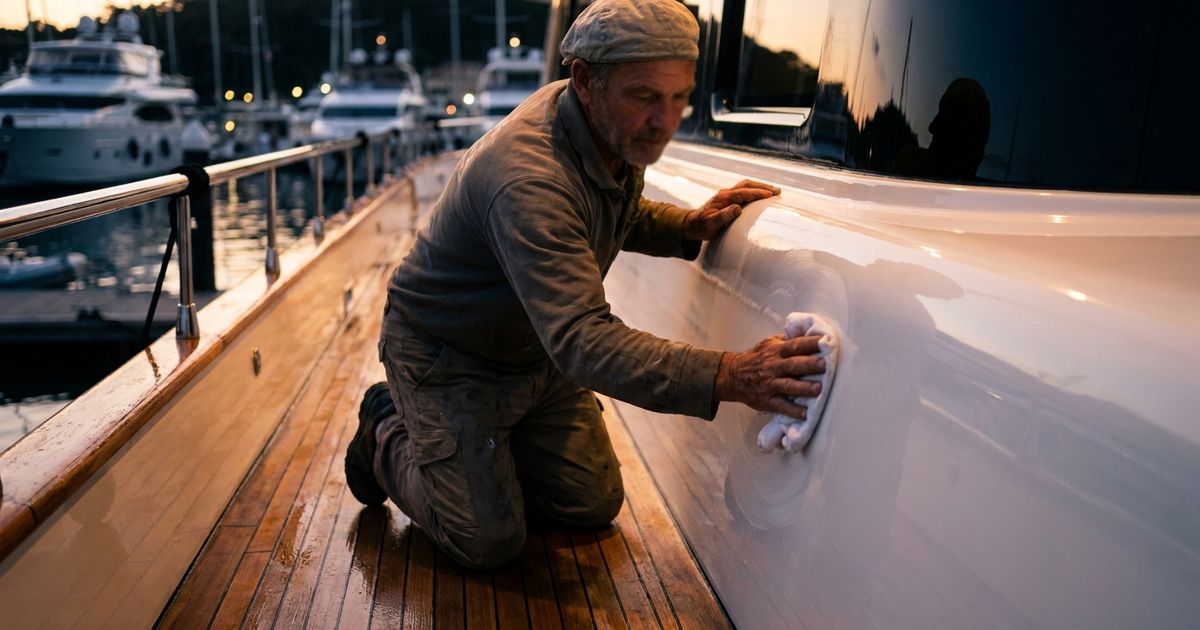
How yacht maintenance businesses show their craftsmanship on their website
What does not work: "We have been active in the industry for twenty years" without further context. That is a claim the owner cannot verify.
Question 3: What does it cost, roughly?
Most maritime service businesses do not list prices on their website. That is understandable, custom work is hard to price without an inspection. But it leaves owners with an unanswered question that keeps them from making contact.
An owner who does not know whether your services fit their budget plays it safe and calls the competitor who does give an indication.
What you can do without locking yourself into exact prices:
- Hourly rate for work where that applies
- Fixed rates for standardized services (winter storage per linear meter, basic wash per length class)
- An indication of the factors that determine the price (coating type, surface area, condition on arrival)
This gives the owner enough to go on to know whether making contact is worthwhile.
Question 4: How does it work in practice?
An owner who wants to bring their boat in for storage wants to know: where do I drop it off, how does intake work, can I access it in the meantime, when can I pick it up again?
An owner who wants engine maintenance wants to know: do you come to the marina, or does he bring the boat to you?
An owner who wants to list their boat for sale through a broker wants to know: what does the first conversation look like, what do I get as a valuation, how long does a boat typically stay listed?
All of these questions can be answered. Most websites do not answer them, so the owner ends up asking them by phone, which takes more effort than expected.
Question 5: How fast do you respond?
Expectations around response times have shifted. Where an owner used to wait a week for a quote, they now expect a response within one to two business days.
A website that says nothing about response times leaves the owner guessing. A website that states "we respond to enquiries within one business day" gives the owner something to hold on to and lowers the barrier to making contact.
This is a small addition with a big effect. It communicates that you take new clients seriously, even before they are clients.
Question 6: Are there others like me who are satisfied?
References and experiences from other owners are not a side note on a maritime service business website. They are the strongest persuasion tool you have.
But it has to be about specific experiences, not star ratings. "5/5 stars, great business!" communicates nothing. "My Bénéteau Antares sat with them for three winters, boat always received and returned in perfect order, never a problem" communicates everything.
Ask satisfied owners for feedback specific enough to be real. Publish it on your website, with a first name and boat type. That is proof that other owners have given you their trust, and that the trust was justified.
Question 7: What is the next step?
The most neglected question on maritime websites: what should I do now if I'm interested?
"Get in touch" is not an answer. An owner filling in the contact form does not know what happens next. When will he hear back? Should he already keep the boat available? What do you need from him?
Describe the first step as concretely as possible:
- "Email us the boat type, the desired date and a short description of what you're looking for, we'll send you a proposal within one business day."
- "Call us on weekdays between 8am and 5pm for a direct conversation about your situation."
- "Fill in the enquiry form, we'll schedule an inspection within three business days."
Every more specific call to action converts better than a generic one.
What puts owners off making contact
Besides the questions they do want answered, there are also things that actively put owners off.
A website that looks abandoned. No recent content, no current availability, no news or portfolio updates. An owner who sees that your website was last updated five years ago wonders if you are still active.
Mandatory account creation. A login screen to access basic information about services or prices is a barrier most owners will not cross.
Unclear service area. "We are active throughout the Netherlands" says too little. Name the harbors or regions where you work. An owner in Friesland wants to know if you know their marina.
No easily accessible contact details. A contact form as the only option communicates that you would rather control when you respond than that you are reachable. A phone number, an email address and preferably an indication of response time give the owner the choice.
FAQ
How long does the research phase typically take for a yacht owner?
That varies by service. For a one-off wash, the decision is quick. For winter storage or major repairs, research can take weeks. Your website has to serve both cases: fast deciders find contact information immediately; careful researchers find the detailed information they need.
Does an FAQ section help on my website?
Yes, if the questions in the FAQ match the questions owners actually ask, not the questions you would like to answer. Ask current clients what they were looking for before they made contact. Those questions belong in your FAQ.
Does the order information appears in on the website matter?
Yes. Owners scan before they read. The most frequently asked questions belong near the top. Information about the business ("who we are", "our history") is less urgent than information about the service ("what we do", "how it works").
Does a chat feature work on a maritime service business website?
Only if it is genuinely staffed during office hours. A chat widget that auto-replies "we're not here right now" does more harm than good. If you add one, make sure someone manages it.
Sources
- Google/Ipsos, "B2B Path to Purchase: How Buyers Research Before Contacting" (Google, 2022)
- Nielsen Norman Group, "Credibility of Websites" (NNg, 2021)
- HISWA-RECRON, "Yacht Service: What to Expect From a Recognized Business" (hiswa.nl, accessed June 2026)
Topics: #yacht owner,#website,#maritime,#customer journey,#trust