Website Optimalisatie
How Does a Yacht Maintenance Business Show Its Craftsmanship on Its Website?
 Stef Wubbe
TL;DR: A yacht maintenance business has craftsmanship you can see, smell and touch, but it is hard to communicate through a website. Most businesses try with claims ("quality work", "years of experience") and fail. What works is documentation: photos of the work itself, specifications of the products used, and process descriptions the owner recognizes as real.
A yacht owner looking for maintenance, washing, winter storage or a gelcoat treatment has one central question before making contact: can I trust these people with my boat?
He asks that question while looking at your website. And he answers it based on what he sees, not on what you claim.
What makes a website for a maritime business credible?
Step 1: Document the work, not just the result
Most yacht maintenance websites show end results: a shiny boat after treatment, a tidy shed after storage. That is better than nothing, but it misses the point.
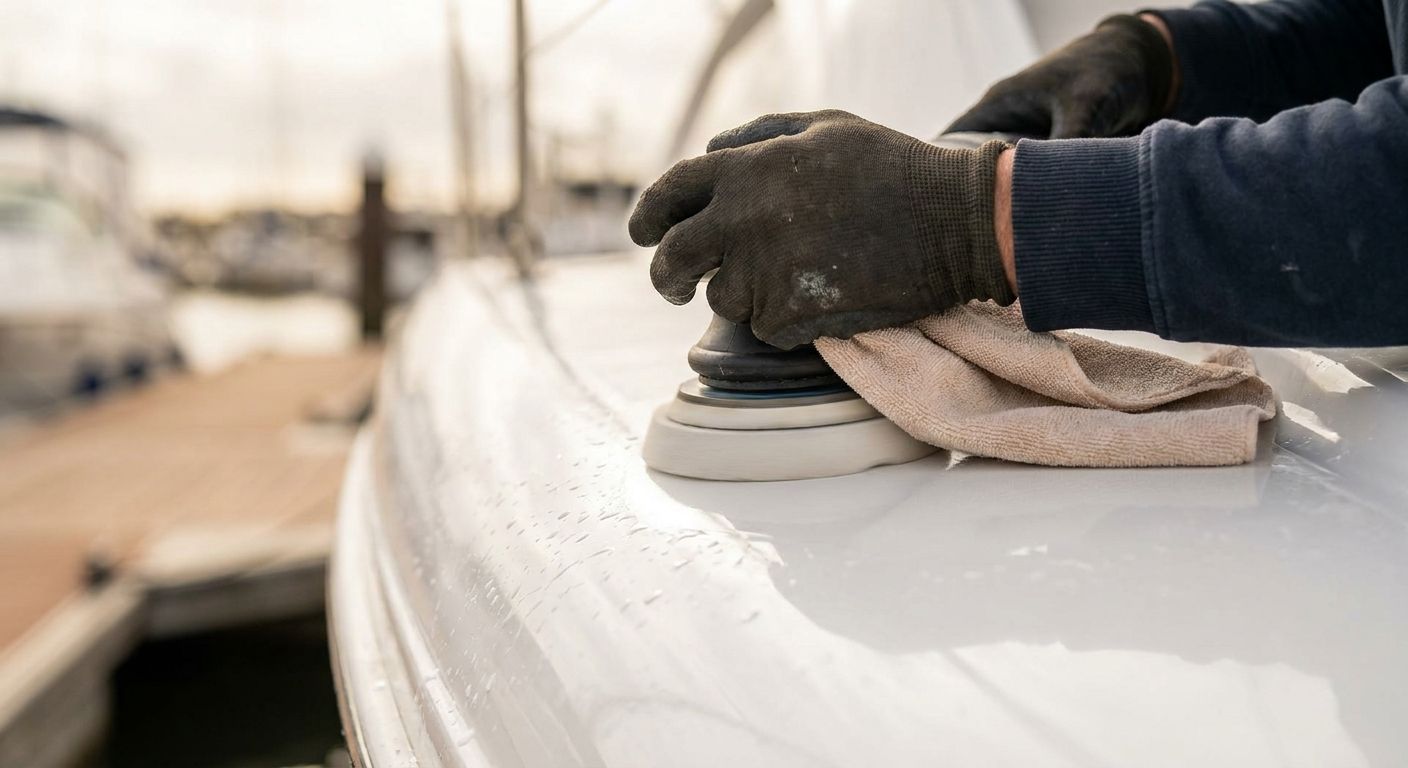
What convinces an owner is the process. Not the shine after the gelcoat, but the thickness measurement before the treatment. Not the boat after washing, but the log documenting the mold lines you found. Not the end result of the engine service, but the checklist showing what you checked.
The reason is simple: anyone can photograph a shiny boat. Only someone who knows what they are doing documents the process so an owner understands what happened.
Practical approach:
- For every new project, create a short photo series: condition on arrival, key moments during the process, end result
- Describe, per project, what the problem was and which choice you made, and why
- Publish this as portfolio items on your website, with the owner's permission
Step 2: Be specific about products and partners
"We work with high-quality products" is a claim every competitor makes too. "We work exclusively with Awlgrip topcoats and Volvo Penta-certified parts" is information.
The difference: an owner who knows their boat recognizes those brand names. That recognition is the start of trust. They know what Awlgrip is. They know what Volvo Penta certification means for warranty handling. And the fact that you name those brands communicates that you know what they mean too.
How specific positioning sets a maritime business apart
Consider:
- The coatings, paints or treatment products you use as standard, and why
- The engine manufacturers for which you are a certified service technician
- Your HISWA recognition as a service business, including what that means for the owner
A HISWA-recognized yacht service business meets set quality requirements. HISWA-RECRON's website states that more than 300 businesses carry this recognition each year (hiswa.nl, accessed June 2026). But most recognized businesses only display the logo. Explain in three sentences what that recognition means for the owner.
Step 3: Show the people behind the business
Yacht maintenance is a people business. The owner entrusts their boat to a person, not a company. A website without faces, without names, without any indication of who does the work, asks for trust without giving anything in return.
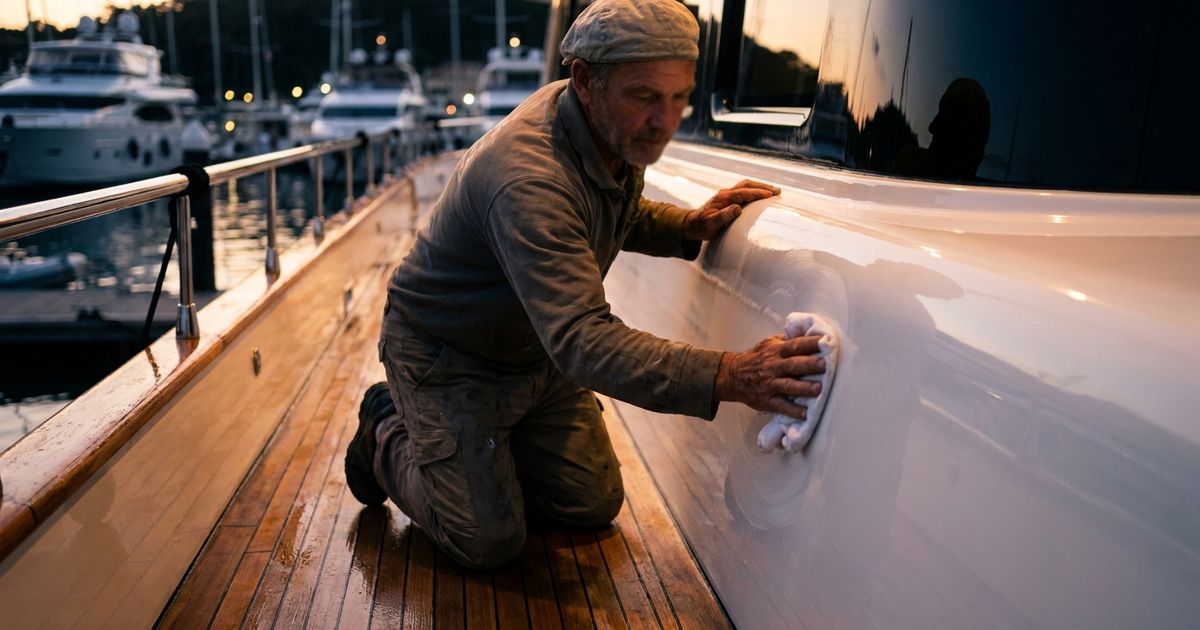
What works: a photo of the owner or lead technician, at the workplace, with the materials in frame. Not a professional portrait on a white background, but a photo that shows context. On the dock. In the workshop. With a boat visibly under treatment in the background.
Three sentences about background are enough. Years of experience, specializations, types of boats worked on. That is the information an owner has when deciding whether to make contact, or not.
Step 4: Describe what is 'standard' at your business
Every service business has a way of working it considers self-evident but that is not self-evident to the owner at all.
Examples of information owners value but rarely find:
- How you receive and inspect the boat on arrival
- How you communicate findings the owner did not already know about
- How you handle it when a planned repair turns out more complex than expected
- How you deliver the boat and what you check before doing so
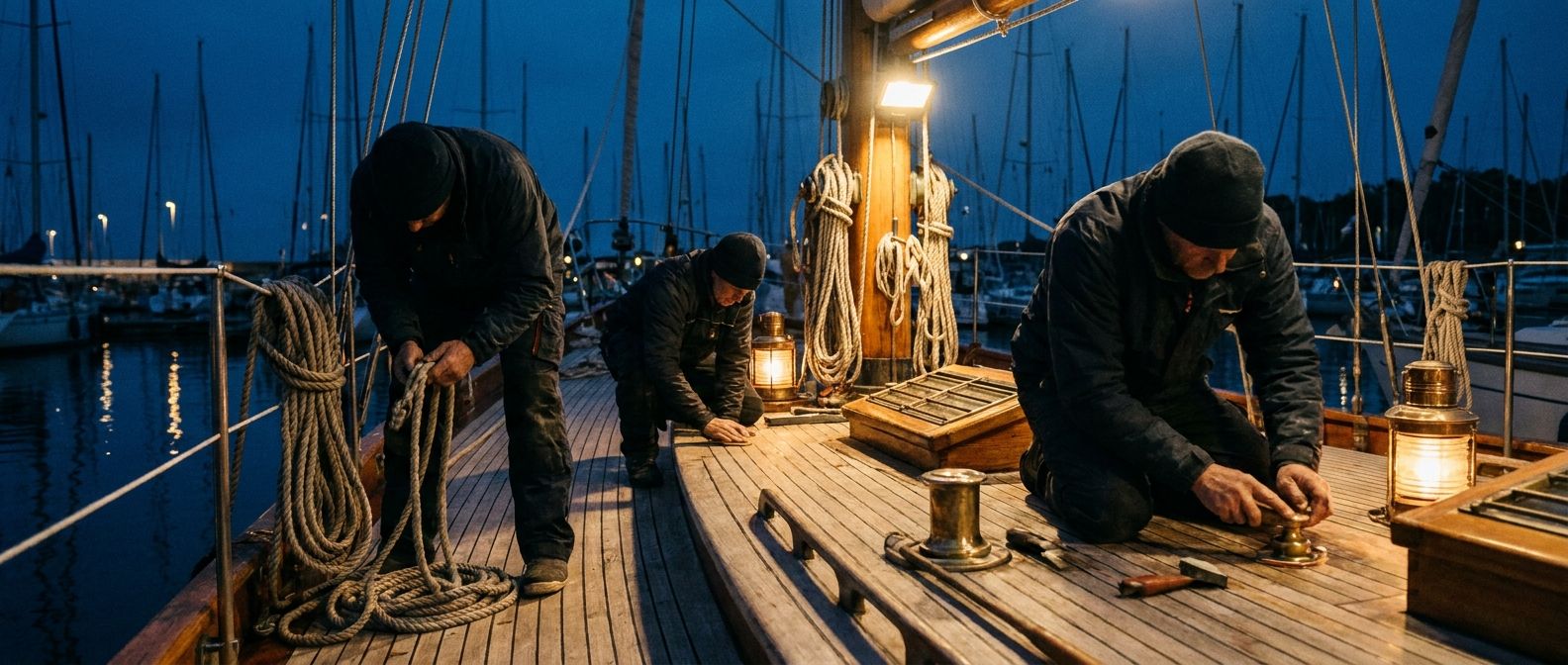
These are process details that are routine for you, but for the owner they are proof that you work seriously. Write them down. Not as a legal document, but as a clear description of how a job runs at your business.
Step 5: Use winter storage as a trust builder
Winter storage is one of the services where owners ask for the most trust. They hand over their boat for months, expecting it to come back in the same or better condition.
A website that offers winter storage without describing it leaves opportunities on the table. Describe:
- The facilities: covered storage, security, owner access options
- The procedures: condition report at intake, regular checks, communication in case of incidents
- The handover: what you check before the boat goes back in the water
These are the questions every owner has. Answer them on the website, and the barrier to contact is largely removed.
Step 6: Avoid the pitfalls of the yacht maintenance website
After analyzing a broad range of Dutch yacht maintenance websites, four recurring problems undermine credibility.
No contact details that immediately build trust. A phone number and an email address are the minimum. Even better: an indication of response time. "We respond to your enquiry within one business day" is a small promise with a big impact on the decision to make contact.
No distinction between services. "We do everything" signals the opposite. A business that names its specializations: gelcoat treatment, winter storage, engine maintenance for Volvo Penta, Yanmar, communicates expertise. A business claiming to do everything communicates nothing.
Portfolio without context. A gallery of nice boats without explanation of what was done is decoration. A portfolio item with a description ("gelcoat treatment after hail damage on a Bénéteau Antares 36, two weeks of work, result: restored to original shine and coating thickness") is proof.
A website last updated years ago. A website with no sign of active content, no new portfolio items, no news, no current availability, shows that the business treats its website as a one-time investment. In a sector where trust is central, that is a concern.

FAQ
How do I handle clients who would rather not have photos of their boat on my website?
Ask for explicit permission on every project. Some owners are fine with it, others are not. An anonymous description of the work without a recognizable boat or name is also valuable, it is about the process, not necessarily about identifying the owner.
Is a price overview a good idea on a yacht maintenance website?
Indicative prices (hourly rate, fixed treatments like gelcoat per linear meter) help the owner judge whether you fit their budget. Custom quotes remain available on request. Fully hiding all pricing information creates a barrier some serious clients won't cross.
Which platform works well for a yacht maintenance website?
The platform matters less than the content. A simple, fast-loading website with good photos and specific text performs better than an elaborate system with generic content.
How often should a yacht maintenance website be updated?
At minimum at the start of each sailing season: current availability, new portfolio items from the previous season, any new services or certifications. That shows the business is active and takes its website seriously.
Sources
- HISWA-RECRON, "Recognized Yacht Service Business: conditions and benefits" (hiswa.nl, accessed June 2026)
- Nielsen Norman Group, "Photos as Web Content" (NNg, 2022)
Topics: #yacht maintenance,#website,#maritime,#craftsmanship